
Looking for a top neck pillow for neck pain 2026? You know the feeling. It’s 3 AM. You shift in your sleep, and a sharp twinge shoots through your neck. You try to find a comfortable position, but nothing works. The pillow that seemed fine when you bought it now feels like it’s working against you.
It’s not just you who is like this.Neck pain is one of the most common complaints among adults, and for many, the culprit is sitting right under their head every night.But here’s the thing most people don’t realize: the problem isn’t always your pillow — it’s that you’ve been choosing pillows the wrong way.
After testing dozens of pillows across different materials, shapes, and price points, I’ve learned that the “best” pillow doesn’t exist in a vacuum. The best pillow for you depends on how you sleep, your body, and what you actually need from a pillow. Here’s what I found and why a towelbased travel pillow ended up being the most versatile solution I’ve ever used.

Let’s start with what’s actually happening when you sleep on the wrong pillow. Your cervical spine has a natural lordosis – a gentle forward curve formed by seven cervical vertebrae that acts as a shock absorber for your head and neck. When you’re standing up straight, your head sits right above your shoulders, and that curve holds. But when you lie down, your pillow needs to fill the gap between your head and the mattress to keep that same natural curve in place.
If your pillow is too high, your neck bends upward and presses on the back of your cervical spine. Too flat, and your head drops back or to the side, straining the trapezius and other supporting neck muscles, along with surrounding ligaments. Too soft, and your head sinks in – your neck muscles end up working all night just to keep your airway open. The result? You wake up with a stiff neck, a headache, or that dull ache that hangs around all day – all classic signs of cervical spine stress and muscle fatigue.
Most pillows on the market are made for a “standard” sleeper – but hardly anyone actually fits that standard. That’s why so many of us end up with a closet full of pillows we never use.
What Makes a Good Pillow.Before you buy another pillow, here’s what actually matters.
The most common mistake people make is confusing “comfortable to touch” with “supportive to sleep on.” A pillow that feels plush in the store can leave your neck feeling wrecked by morning.
For neck pain relief, the pillow needs to be firm enough to support the natural curve of your cervical spine without collapsing under the weight of your head. Memory foam is often recommended because it contours to your shape while providing resistance. But foam isn’t the only option — and for many people, it’s not even the best one.
When you lie down, your head, neck, and spine should form a neutral, straight line — just like when you’re standing with good posture. Any pillow that disrupts that alignment is going to cause problems.
That means the height of your pillow — what’s often called “loft” — needs to match your sleeping position. Side sleepers generally need a higher loft to fill the gap between their ear and shoulder. Back sleepers need a medium loft to support the natural curve of the neck. Stomach sleepers need the lowest loft, or they risk overextending their neck.
Here’s the problem with most “ergonomic” pillows: they’re designed for one ideal sleeping position. But you don’t stay in one position all night. You shift. You roll over. You change angles. A pillow that can’t adapt to those changes is going to leave your neck unsupported for at least part of the night.
That’s why adjustable pillows — ones where you can change the height, firmness, or shape — are often more effective than fixedshape pillows. The ability to customize the pillow to your body, rather than trying to fit your body to the pillow, makes a huge difference.
What Works, What Doesn’t, and Why. Over the years, I’ve tested pretty much every pillow out there that claims to help with neck pain. Here’s what I actually found.
These are the most common “neck pain” pillows. They have a curved shape designed to support the cervical spine. They work well for some people — especially back sleepers who need consistent support. But they have a major limitation: the shape is fixed. If the loft doesn’t match your anatomy, the pillow won’t work for you. And if you change positions during the night, the contour can actually become uncomfortable.
These pillows let you add or remove filling to customize the height and firmness. They’re more flexible than fixedshape pillows, and they work for a wider range of sleepers. The downside? The filling tends to shift over time, and you have to keep adjusting it to maintain the right support.
These are soft, fluffy, and feel luxurious. But for neck pain, they’re usually a disaster. They compress too much under the weight of your head, offering little support. Unless you’re a stomach sleeper who needs a very low loft, these pillows are more likely to cause neck pain than to relieve it.
This category includes everything from Ushaped neck pillows to rolled towels to more unconventional designs. Most of them are designed for shortterm use — flights, car rides, hotel stays. But a few of them are surprisingly effective for everyday neck pain, especially if you’re looking for something portable and adaptable.
A few months ago, I was on a long flight, dealing with the usual neck pain that comes with trying to sleep in an economy seat. I didn’t have a proper travel pillow on me, so I rolled up a small towel and tucked it behind my neck. It wasn’t pretty, but it actually worked better than any travel pillow I’d bought before.
That got me thinking – why isn’t there a pillow designed around this simple idea? Most orthopedic pillows and ergonomic pillows on the market rely on a fixed contoured design – the classic shape that dips lower in the center and rises on both sides to cradle your head while supporting your neck. It’s a sound concept, but it only works if that exact contour matches your body. If it doesn’t, you’re stuck with a one-size-fits-all solution that fits no one perfectly. Turns out, there is a better approach. It’s a towelbased travel pillow with an adjustable design. Nothing flashy – no memory foam, no fixed contours. But it fixes the three biggest issues with most neck pain pillows: it adapts to how you need it, packs down small, and breathes well so you don’t overheat.
Because it’s made from soft, flexible towel fabric, you can adjust the height and shape to fit your exact needs. Roll it tighter for more support. Loosen it for a softer feel. Tuck it under your neck, behind your shoulders, or even use it as lumbar support. It works for side sleepers, back sleepers, and even stomach sleepers — because you’re the one controlling the shape.
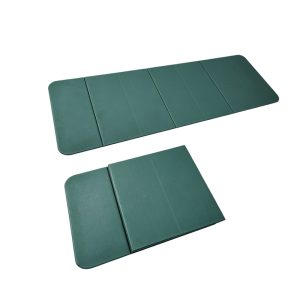
Most neck pain pillows are bulky. They take up space in your suitcase, and they’re a pain to carry around. This towel pillow folds flat into a compact rectangle. It slides into a backpack, a carryon, or even a jacket pocket. You don’t have to leave it behind when you travel — and you don’t have to dedicate half your bag to a single pillow.
Memory foam traps heat. Down pillows get flat. This towel pillow is made from quickdry, breathable fabric that stays cool against your skin. No more waking up with a sweaty neck in the middle of the night. And because it’s washable, it stays fresh without any special care.
If you’ve been dealing with chronic neck pain and haven’t found much relief, this one is worth trying. It’s especially handy if you travel often and need something that packs small and works in different settings, or if you tend to shift positions during the night and need support that adapts. It’s also great if you’re tired of bulky pillows that eat up luggage space, or if you sleep hot and want something breathable.
That said, if you have a specific medical condition that calls for a prescribed orthopedic pillow, or if you already have one that works for you, there’s no need to change. But if you’ve been cycling through pillows without finding one that clicks, the towel-based design offers something most others don’t – you can adjust the support in real time, exactly the way you need it.
Before you buy any pillow, ask yourself these three questions.
1. What’s Your Primary Sleeping Position?
This is the most important factor. Side sleepers need a higher loft. Back sleepers need a medium loft. Stomach sleepers need a low loft. If you change positions, look for a pillow that’s adjustable so you can modify the height as needed.
2. What’s Your Pillow Material Preference?
Memory foam offers consistent support but can trap heat. Down is soft but compresses easily. Latex is breathable and supportive but can be expensive. Towel fabric is breathable, adjustable, and easy to clean, but it doesn’t offer the same “cradling” feel as foam. Consider what matters most to you.
3. How Will You Use It?
Is this a pillow for your bed, your travel bag, or both? If you need something versatile, a foldable, adjustable design is hard to beat. If you only need a home pillow and you’ve found a fixedshape pillow that works for you, stick with it.
Neck pain is complicated. What works for one person might not work for another. But after years of testing pillows, talking to experts, and waking up with stiff necks, I’ve learned one thing that applies to everyone: the best pillow is the one that adapts to you, not the other way around.
Most pillows are designed for an idealized sleeper who doesn’t exist. The towel-based travel pillow I’ve been using works because it doesn’t try to force you into a single shape. It lets you adjust, experiment, and find what actually feels good for your body.
If you’re tired of waking up with neck pain, stop buying pillows that promise a one-size-fits-all solution. Look for something you can customize. Something that breathes. Something that doesn’t take up half your closet.
And if you’re heading out on a trip — or just want a pillow that works as well on a plane as it does in your bed — consider something that folds flat, adjusts to your height, and supports your neck without suffocating it. Your neck has been asking for a break. It might be time to listen.