
Want to know how to organize your closet in a small space? No matter how many closets I have, my clothes never seem to fit. Every time I open my closet door, it‘s a small disaster waiting to happen. Hangers are packed so tightly that clothes are crushed together, winter and summer pieces tangled in one messy pile. Neatly folded tops and jeans collapse within three days into a heap. Socks are always missing their other half. Every morning, when I’m already rushing to get ready, finding something to wear eats up a third of my time—and rummaging through the chaos only makes it worse.
I’ve tried tidying up before, but the results never last. All that effort, and it’s back to square one in no time. After a while, I started to wonder what I was doing wrong. Then I realized: I was always cleaning up, but never truly organizing. Tidying means moving things from one spot to another. Organizing means giving every single item a designated home. The reason my closet kept falling into disorder wasn’t because I had too many clothes—it was because things didn‘t have a permanent place to go. I’d toss things in after use, stuff them in when they didn‘t fit, and pile them up when I ran out of room. It took me a while to figure that out. I tried plenty of tips from online decluttering posts, tested different methods, and eventually developed a system that actually works for my closet. If you’re struggling with the same frustration, maybe my experience can help you too.

Without this step, no amount of neat folding or rearranging will make your closet roomy enough. The biggest mistake you can make is trying to organize while everything is still inside. Are you just moving a shirt from the left side to the right side, shuffling things around, and ending up with the same mess? Stop.
Take everything out. Every. Single. Piece. Lay it all on your bed or sofa. Only when you can see your full wardrobe in plain sight can you truly assess what you own—how many pieces, what to keep, and what to let go.
When deciding what stays, ask yourself a few honest questions: Have I worn this in the past year? Does it still fit me well? Do I keep it because I truly love it, or just because it feels wasteful to throw it away? Letting go of clothes that no longer fit, are outdated, or are damaged frees up a surprising amount of room. It may sting to part with certain items, but think of it this way: those unworn pieces have been taking up valuable real estate in your closet for years. Once you‘ve done this purge, you’ll finally have the breathing room you need to plan properly.
After decluttering your wardrobe, don’t rush to put your clothes back. First, think about what your closet needs to hold. Are there more long dresses and coats, or more short tops and pants? A very practical principle is called the “three-part method”: hang the clothes that are prone to wrinkling, such as suits, shirts, and dresses; stack T-shirts, sweatshirts, and jeans vertically; and store out-of-season items and spare bedding in the top cabinet or under-bed box.
Only hang the clothes that are prone to wrinkling on the hanger; for the rest, fold them and place them. When placing them, always separate the long and short items and avoid having long clothes covering short ones, which would waste the vertical space of the closet. This step not only makes better use of space but also makes the closet look neat and tidy visually. If your closet has only one hanger, you can add an extension rod below to utilize the upper and lower spaces.
Everyone knows how to fold clothes, but keeping them stable is the real challenge. I used to stack Tshirts and sweaters into perfectly tidy piles, only to have the whole stack collapse the moment I pulled one out. Sound familiar? The problem is that stacks lack separation—when you tug one item, friction drags the neighboring pieces along with it.
A better way is to fold clothes into rectangles and stand them upright inside drawers or on shelves, like books. This way, every item is visible, and pulling one out won’t disturb the rest. Small items like socks and underwear can be rolled and placed upright too, so you never have to rummage through a messy pile.
If your shelves are deep and things tend to get lost in the back, try rolling your clothes instead—it saves space and gives you a clear view of everything at a glance. When seasons change, place your current season‘s daily wear on the middle shelves, store offseason items up high, and keep everyday essentials like underwear and socks within easy reach. That layout truly fits your daily routine.
If you’re not a natural at organizing or just want to save effort, good storage tools are a lifesaver. They not only keep your closet looking tidy but also reduce the energy you spend on maintenance. Good habits are the foundation, but the right tools make the process far simpler and less tiring. Not sure which tools to buy? Read on.
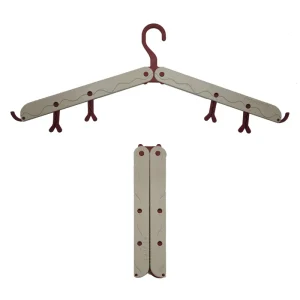
Choosing the right hangers can dramatically boost your closet‘s storage capacity. Swap thick wooden or plastic hangers for slim, sturdy ones—you’ll instantly gain extra hanging space on the same rod. Thin hangers also prevent clothes from slipping off. For travel or business trips, a collapsible travel hanger is a smart addition; it can hold multiple items at once—camisoles, scarves, socks, gloves, and undergarments—and folds flat into a slim piece that tucks easily into your suitcase side pocket. It‘s useful both at home and on the go.
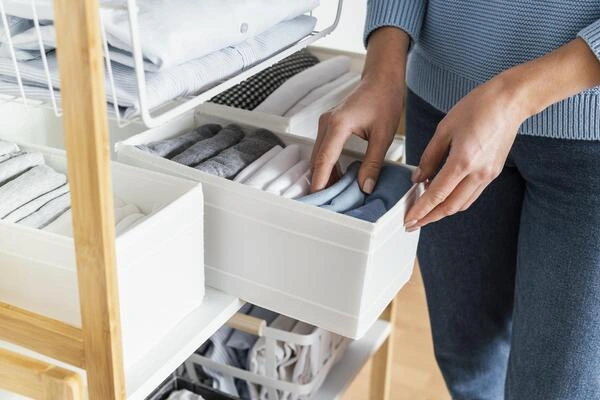
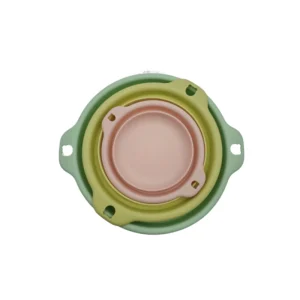
As mentioned earlier, stacked clothes tend to collapse when you pull one out. Besides folding them upright, a simpler solution is to use foldable storage bins or baskets to separate different categories of clothing. Each bin stands alone, so taking out one item won’t disturb the rest. During offseasons, these bins can be completely flattened and stored under the bed or in closet gaps, unlike rigid plastic boxes that take up space even when empty. Hanging organizer bags are also great—they utilize vertical space for odds and ends without occupying shelves or drawers.
Socks, underwear, belts, scarves—these little accessories are the true culprits of clutter. They’re small, plentiful, and easy to misplace. Use dividers to separate them: socks together, undergarments together, belts rolled and placed in one section.Foldable compartment boxes are perfect for this—each section stays clear, and you can grab what you need in the morning without messing up the rest.
The inside of your closet door is often overlooked. Install a few hooks or hang a pocket organizer there to give hats, scarves, and belts a designated spot. Nodrill foldable wall shelves are also handy—they attach with adhesive strips inside the door, sturdy enough for lightweight items like hats and small bags. When you want to reposition them, simply peel them off without leaving marks.
The floor of your closet is another neglected zone. Shoes and bags tend to pile up unnoticed. Adding a stackable shoe rack or a few storage bins can make an instant difference. Choose foldable bins with rigid bottoms—they stack steadily on the floor or shelves, and when the season changes, you can collapse them and store them away, unlike bulky plastic bins that stay put all year.
It takes effort to clean up once, but it takes even more effort to maintain it. Every night before bed, spend a minute or two on a quick reset: hang up the clothes you plan to wear tomorrow, put away freshly laundered items, and return anything you’ve used to its proper spot. These small, simple habits make a huge difference in keeping your closet consistently organized.
A closet that stays tidy for the long haul isn‘t the result of a single deepcleaning session—it comes from doing three things together: smart planning, the right tools, and the daily habit of putting things back where they belong. Start with decluttering to reduce the total number of clothes, then organize by giving every item a fixed home, and finally choose tools that make storing effortless. With these steps, keeping your closet neat becomes simple and sustainable.