
Whether you’re a woman or a man, no matter how strong you are, carrying a heavy load in a plastic bag will always leave red marks on your hands. On a regular day after work or over the weekend, going to the grocery store or supermarket is supposed to be enjoyable. You pick out your items, go through the checkout, and everything feels fine. But the moment you step outside and walk a couple hundred meters, your fingers start to go numb. The problem lies with the plastic bags themselves. Their handles are thin and narrow, digging into the palm of your hand and concentrating all the weight onto that one small contact point. You stop, switch hands, and keep going, only to end up with deep red marks on both hands. After enough of these experiences, I started to wonder—am I carrying them wrong?
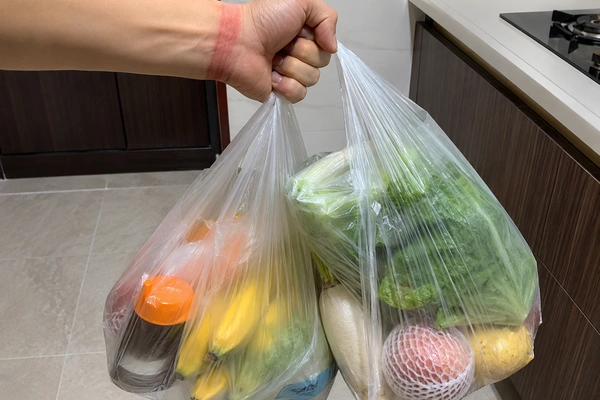
It’s not really about how much the bag weighs; it’s about the contact area. The handles of plastic bags or regular shopping bags are usually thin and narrow, meaning all the weight presses down on a small strip of your hand. If your fingers are constantly squeezed like this, blood flow slows down, and you end up with pain and numbness. Switching hands only transfers the discomfort to the other side. There’s another thing that often goes unnoticed: uneven weight distribution. When items inside the bag shift to one side, the bag becomes unbalanced and harder to carry. Your body naturally leans to compensate, and before you know it, your back starts to hurt. This is especially risky for older adults. That’s exactly where a well-designed wide-strap shopping bag or rolling cart can make a real difference—they transfer the load from your hands to your shoulders or wheels, reduce the contact pressure, and make shopping a lot easier on your body.
The fix is actually pretty straightforward. If the contact area is too small, we just need to make it bigger. Once, when I couldn’t carry a bag any further, I took off my jacket and wrapped it around the handle—the extra fabric spread out the weight, and my fingers felt noticeably less strained. I’ve also seen plenty of people online share similar tricks: using a towel, a scarf, or the sleeve of a hoodie to pad the handle. Same idea—increase the surface area, reduce the pressure. But it’s not always convenient to use your clothes as a cushion, especially in summer when you’re not wearing anything thick enough to help. Another good habit is to split your haul into two or three smaller bags and carry one in each hand. That way, the weight is balanced across your body, and your back and shoulders don’t have to work as hard.
There’s also a recommended weight limit you might want to keep in mind. Some online sources suggest that you shouldn’t carry more than 15% of your body weight in one go. For example, if you weigh 60 kg, try to keep your load under 9 kg. Going beyond that puts extra strain on your shoulders, neck, and back, and over time could lead to muscle pain or even long-term injury. Sure, it’s not always realistic to measure your bags at checkout, but if you do end up with more than you can comfortably handle, consider splitting it into multiple trips or using a tool to help.
Later on, I noticed that some supermarkets sell padded handle grips that you can slide over the thin plastic handles. They’re basically a wide, cushioned strip with a slot in the middle—you just fit the handle through, and your hand feels much better right away. They’re inexpensive and genuinely helpful, but not every store carries them. Don’t worry if yours doesn’t—there are other options.
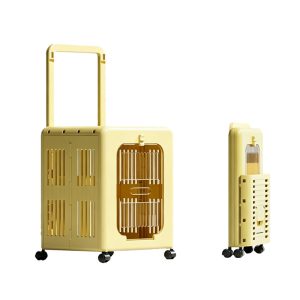
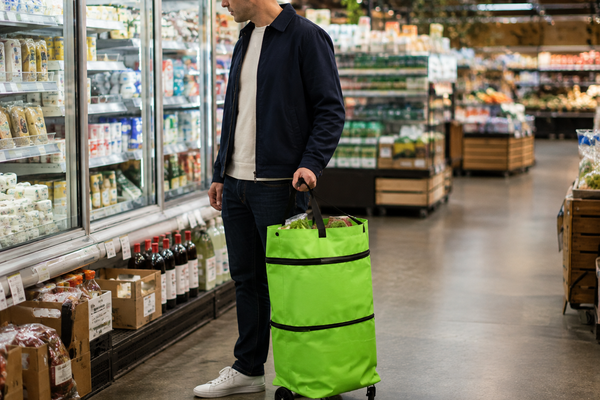
One of the most effective solutions I’ve found is using a foldable shopping cart bag. I keep one at home and it’s been a game-changer. Most of the time, I fold it up and slip it into my jacket pocket or daypack. When I get to the store, I just open it up, load it after checkout, and roll it out—no lifting required. When I’m done, I fold it back down and it tucks away neatly without taking up much space. It’s a cart when you need it, and a compact bundle when you don’t. I honestly love it.
Thick gloves or padded gloves also help protect your palms from pressure and prevent red marks or numbness during those longer hauls. There are also multi-bag handle clips that let you hook several bags onto one grip, making them more stable and spreading out the weight even more—great for longer walks.
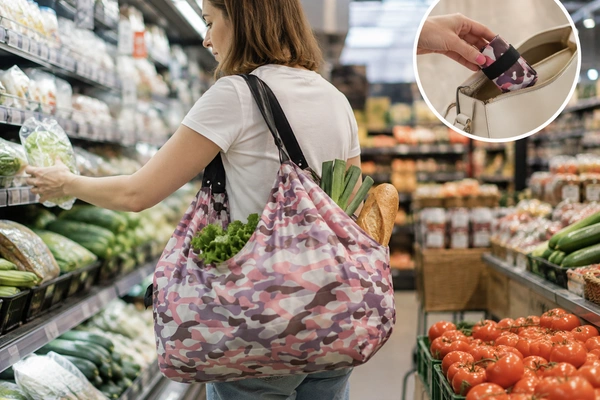
If you like to look stylish while you shop, there are also good-looking foldable shopping bags—and they’re what I use most often. These fold up incredibly small. I actually took a photo for comparison, just to show how compact they are. It fits in the palm of your hand and takes up almost no room in your bag or at home. When you get to the store, just unfold it and you’ll be surprised by how much it holds—way more than a typical plastic bag. The handles are wider too, so they don’t dig into your hands.
What I appreciate most is that the material is noticeably thicker than those flimsy plastic bags you get at checkout. You don’t have to worry about it tearing even with a few bottles, milk cartons, or a load of vegetables. It’s also water-resistant, so rain isn’t a problem—just wipe it with a tissue and it’s clean again. Putting it away is just as easy; a quick fold on each side and it’s ready to tuck back into the side pocket of your daypack. I’ve gotten so used to it that I feel like something’s missing if I don’t have it with me. Next time you head to the store, consider bringing one along—it’s better for your hands, better for the environment, and honestly, just smarter shopping.