
Wondering about the best thickness for a yoga mat for Pilates in 2026? How thick should your Pilates mat actually be?Every Pilates instructor I’ve talked to has a different take. One says you need a 12mm mat for spine protection. Another uses 6mm and says anything thicker just makes them feel disconnected from the floor. The truth is, there’s no single “right” thickness. But there is a range that works, and a set of trade-offs that every practitioner should understand before they buy.
Most advice on mat thickness treats Pilates and yoga like they’re the same thing. They’re not. The movements are different. The way your body hits the floor is different. A thickness that works well for a standing yoga practice can be completely wrong for a matbased Pilates session.
Yoga mats are typically 3mm to 6mm thick. That thinness is intentional. In standing yoga poses like Warrior III or Tree Pose, you need to feel the ground beneath you so you can balance. Too much cushioning makes those poses unstable.
Pilates works differently. Most of the practice happens lying down, rolling on your spine, or kneeling. Your spine, hips, and knees bear weight against the floor for extended periods. A 3mm yoga mat doesn’t provide enough padding for those movements. You’ll feel every hard surface through the mat, and after a few sessions, your lower back and tailbone will let you know it.
This is why Pilates mats are significantly thicker. The generally recommended range for Pilates is 6mm to 15mm, with many dedicated Pilates mats starting at 10mm. At a glance, the difference is clear: a Pilates mat is 6mm to 15mm thick, while a yoga mat is 3mm to 6mm thick.
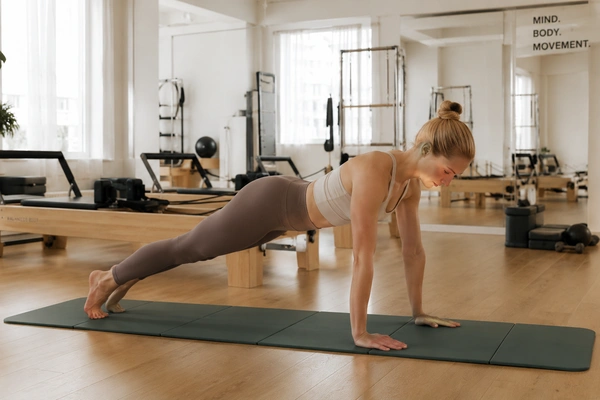
If you try to do Pilates on a standard 3mm or 4mm yoga mat, you’ll feel the problem right away. Teaser, rollups, and spine twists will press your vertebrae into the floor. Your tailbone will start to ache during the hundred. Your knees will complain in kneeling positions.
A mat that’s too thin doesn’t just make the practice uncomfortable – it makes it harder to do right. When your body is busy dealing with discomfort, you can’t engage the right muscles. Your form slips, and the exercise loses its effectiveness.
On the other end, a mat that’s too thick introduces different issues. A 20mm or 25mm mat provides excellent cushioning, but it also creates instability. In exercises where you need to push through your hands or feet to generate movement, the mat compresses instead of providing solid resistance.
For most people, the sweet spot is somewhere between 6mm and 10mm. That range gives you enough cushioning to protect your spine and joints during floor work, while still keeping a stable surface for exercises that need pushing or balancing.
Thickness is only one part of it. The material itself changes how much cushioning you actually feel. A 6mm TPE mat feels different from a 6mm PVC mat, and neither feels like a 6mm natural rubber mat.
TPE mats strike a decent balance between cushioning and stability for both yoga and Pilates. They’re lightweight, more eco-friendly, and provide moderate support. If you’re looking for one mat that works for both practices, a 6mm to 8mm TPE mat is a solid middle ground.
PVC mats are more common in studios. They offer denser cushioning and better durability, but they’re heavier and less sustainable.
Natural rubber mats give you excellent grip and cushioning, but they weigh more and tend to have a noticeable smell.
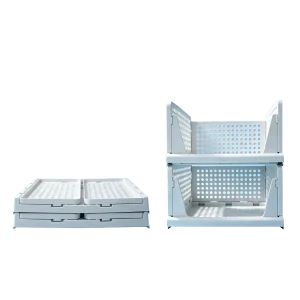
Here’s a dilemma that Pilates practitioners often face: you need a thick enough mat to protect your spine, but thick mats are heavy and difficult to store. Traditional rolled thick mats remain bulky cylinders when stored — they take up space, they constantly fall over, and they’re a hassle to carry around.
Foldable Space solves this dilemma with a folding design. The mat is made from POE (Polyolefin Elastomer) foam, which offers excellent resilience and comfortable support. The thickness comes in multiple options, covering 6mm, 8mm, and 10mm. The 6mm version suits practitioners who alternate between yoga and Pilates. The 8mm thickness is the ideal choice for most Pilates practitioners, providing the perfect balance of cushioning and stability. The 10mm version offers extra protection for those with sensitive joints or anyone who prefers additional cushioning during floor work.
When unfolded, the mat measures 60cm by 180cm, large enough to cover most Pilates mat exercises. When it’s time to pack up, the mat folds down to a compact block just 9cm to 13cm thick, easily sliding into a narrow gap beside the sofa, under the bed, or next to a bookshelf. It takes up almost no space at all. The weight ranges from 0.8kg to 1.2kg, making it convenient to carry to the studio or for outdoor practice. The material is stain-resistant and easy to clean, requiring minimal maintenance.
For practitioners who switch between Pilates and yoga, or for those with limited home space, Foldable Space offers a rare balance between thickness and portability. You don’t have to sacrifice spinal protection for easy storage, and you don’t have to put up with a bulky rolled mat that’s always falling over just to get the thickness you need.
The right thickness also depends on what kind of Pilates you do. Mat Pilates – the traditional form done on the floor – benefits from thicker mats because your spine spends a lot of time in contact with the ground. Reformer Pilates uses a machine with its own carriage, so the mat is secondary – a thinner one is often fine.
Your body type matters too. Heavier practitioners compress mats more and benefit from extra thickness. Lighter practitioners can often get by with a 6mm mat and still feel plenty of cushioning.
The right thickness for a Pilates mat depends on your practice frequency, your body weight, and whether you also do yoga.
If you primarily do Pilates and practice several times a week — A 10mm to 12mm mat provides the cushioning you need for regular spine-intensive work.
If you alternate between yoga and Pilates — A 6mm to 8mm mat offers a balance that works for both practices. It gives you enough cushioning for Pilates floor work while still being stable enough for standing yoga poses.
If you only practice occasionally — A 6mm mat might be all you need.
If you have sensitive joints or a history of back issues — Consider a 10mm or thicker mat. The extra cushioning reduces pressure on your spine and tailbone during floor exercises.
There is no universal “best” thickness for a Pilates mat. There’s only the thickness that matches your practice, your body, and your preferences. A 6mm mat works for some people. A 10mm mat works for others. And a 12mm mat is essential for some.
The key is to understand the trade-offs. Thinner mats give you more stability and portability but less cushioning. Thicker mats offer more protection but can feel unstable and heavy.
For most practitioners, 6mm to 10mm is the range to explore. Within that range, your body will tell you what it needs. If you’re also looking for a mat that balances thickness, portability, and smart storage, the Foldable Space POE folding mat is worth considering — it lets you protect your spine without ever worrying about where to put the mat when you’re done.