
Looking for the best collapsible dog crate for small dogs in 2026? The travel problem nobody really talks about with small dogs. They’re small, so bumps and vibrations hit them harder. Their center of gravity is lower, so they slide around more in the car. And most importantly, when they’re in an unfamiliar environment, that instinctive lack of security can easily turn into panic.
Most travel crates for small dogs on the market today are basically just scaled-down versions of large breed crates—same materials, same folding mechanisms, same ventilation. Manufacturers treat small dogs as if they’re just smaller versions of big dogs, with no other real differences. But that’s not the case at all. Their travel needs are fundamentally different.
The gap between what small dogs actually need and what’s available on the market is exactly why so many small dogs tremble, pant, and try to escape in the car. It’s not that they don’t enjoy travel—it’s that the crate they’re in was never designed with them in mind.
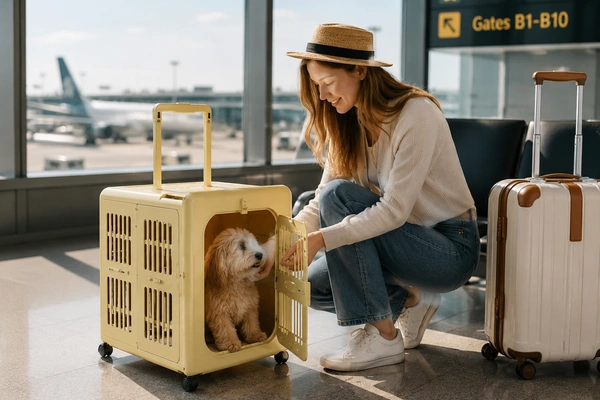
A well-designed collapsible crate for small dogs needs to solve three problems that aren’t as critical for large breeds.
1. Weight-to-size ratio matters more than you’d think. A five-pound wire crate might not feel heavy on its own, but when you’re carrying it along with luggage, your dog, and everything else, that weight adds up fast. A crate for a small dog needs to be light enough that you don’t dread moving it—but sturdy enough that your dog feels secure inside.
2. Ventilation isn’t just about comfort—it’s a safety concern. Small dogs overheat more easily than large ones because they have more surface area relative to their body mass. A crate with poor airflow can get uncomfortably warm in the car, even on a mild day. A well-made collapsible crate treats multi-sided mesh windows as a necessity, not an afterthought.
3. The crate should feel safe, not like a cage. Small dogs are naturally drawn to enclosed spaces—but that only works if the space feels secure. A crate that shifts, rattles, or moves during transport will make them more anxious, not less. It needs to be stable enough that your dog doesn’t feel like the walls are moving.
Travel anxiety in small dogs often stems from two things: lack of control and lack of familiarity. They don’t understand where they’re going or how long they’ll be there, and they can’t see their surroundings the way they would if they were walking.
A well-thought-out collapsible crate addresses both of those issues. With large mesh windows on multiple sides, your small dog can see you and what’s around them – which helps reduce that trapped feeling. When the crate stays steady and doesn’t shift during travel, they feel more in control of their space. And when you use the same crate consistently, it becomes a familiar anchor – something they recognize even in unfamiliar places.
Getting a small dog used to a foldable crate takes time and patience. A few days before your trip, leave the crate open in the living room with some of their favorite treats inside. Let your dog explore at their own pace. You can also place their meals inside the crate with the door open. These small steps help your dog feel good about the crate—so it becomes a safe space, not a place they want to avoid.
When choosing a foldable crate for a small dog, pay attention to size, weight, ventilation, and cleaning.
The Foldable Space collapsible dog crate is built specifically for small dogs. It weighs just 1.28 kg and folds down to a slim, flat shape that fits almost anywhere—against a wall, in the trunk, or inside a luggage compartment, without taking up much room. It also provides the ventilation and visibility small dogs need to feel at ease on the road.
The interior is sized for small dogs up to 7 kg—roomy enough to stand and turn around, but not so large that it feels empty. It’s a snug, den-like space rather than an open, uninviting one. Large mesh windows on three sides allow for good airflow and a clear view of the surroundings, which helps reduce anxiety during car rides.
The top opening is a practical feature that owners really appreciate. When your dog is nervous at the vet or on a bumpy road, you don’t have to open the entire door—just unzip the top a little and reach in to gently pet them. It’s a small detail that makes a real difference in keeping your dog calm.
Folding is straightforward—one person can set it up or pack it away in seconds, with no tools, no instructions, and none of the frustration that comes with complicated gear. The inner pad is removable and machine-washable, and the exterior wipes clean with a damp cloth.
Before you head out, give your dog some time to get comfortable with the crate in a familiar environment. Put a used blanket or a worn T-shirt that smells like you inside—your scent will help them feel more at ease. The goal is for the crate to feel like a normal, safe space before it’s ever associated with travel.
If you’re planning a long trip, start with a few short practice drives beforehand. Begin with ten minutes and gradually increase the time. This helps your dog get used to the crate without feeling trapped or anxious for too long.
If you’re driving, make sure the crate is secured properly—use a seatbelt or tie-down strap to keep it from shifting in the car. A crate that moves around during the ride can make your dog uneasy, and it’s also dangerous in sudden stops. This one’s important.
On longer trips, take breaks along the way. Stop every few hours to let your dog stretch, drink water, and relieve themselves. A tired, comfortable dog is a calm dog.
A good collapsible travel crate for small dogs should do one thing above all else: make travel easier for both of you. Light enough that you don’t think twice about bringing it. Sturdy enough that your dog feels secure. Ventilated enough that they stay comfortable.
That’s why I recommend the Foldable Space collapsible crate. It checks all those boxes. It’s not trying to be flashy—it’s just a practical tool that makes traveling with a small dog genuinely less complicated.Choose a crate that helps your small dog feel at ease.