
Looking for the best folding fitness mat for travel? I’ve noticed something interesting: quite a few of my friends have bought exercise mats, but not many of them actually end up sticking with them over the long run. Some people use their mats a few times when they first get them, but once the novelty wears off, the mat gets rolled up and tucked away in a corner against the wall. Before long, it’s covered in a thick layer of dust. Then, on the rare occasion they feel like working out again, they see how dirty it is and realize they have to wipe it down first, then struggle to unroll it, and after the workout, spend ages putting it away again. Just thinking about that whole sequence is exhausting, so they lose the motivation to even start. Most people would blame this on a lack of selfdiscipline or laziness, but the real issue is that they didn’t choose a welldesigned yoga mat. A mat that’s truly made for exercise shouldn’t require you to waste mental energy on anything other than the workout itself.
Every time I finish a workout, my muscles are sore and burning, my legs are trembling, I don’t have the extra strength to stand up, and sweat is dripping off my face. At that moment, all I want is to just sit on the floor and recover for a bit. But we still have to roll up our mats, put them away—bend down, pick them up, align the edges, roll them tight, press down so they don’t spring open, and then find a place to store them. This process isn’t a big deal in itself, but it happens exactly when we least feel like moving.
A lot of people can stick with a personal trainer at the gym, but when they work out at home, they slack off after a couple of days. The difference is right here: at the gym, someone else cleans up for you—you just train. At home, you have to clean up after yourself. Over time, just the thought of having to roll up the mat after a workout—all that hassle—makes you tired before you even start. So you don’t feel like beginning. This has nothing to do with willpower. It’s simply a design flaw in the mat.
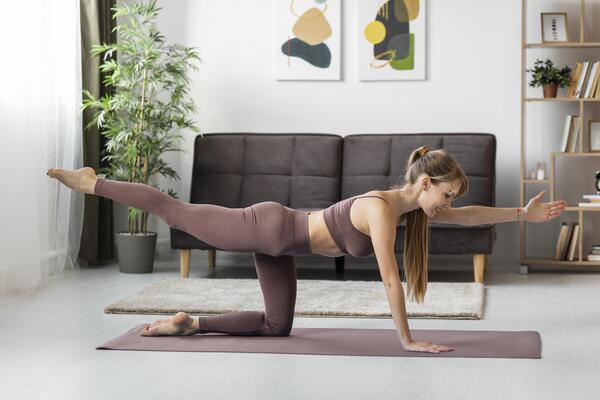
That’s where the foldable mat comes in. It completely simplifies that final step. No rolling, no aligning, no holding it down to keep it from springing open. When you’re done, just fold it—one second, done. You don’t have to force yourself to do one more chore after an exhausting workout. The mental burden is smaller, and the next time you think about exercising, you won’t subconsciously run through the whole “and then I have to roll it up” hassle in your head.
Simply put, people hate trouble. Working out is already counterhuman nature; if your gear makes it even more annoying, staying consistent gets that much harder.
A lot of people think a foldable mat is just about saving space. It’s not. What it really does is lower the mental barrier to getting started. Between “I should work out” and actually doing it, if all you have to do is unfold the mat, you’re much more likely to go for it. The best part is, a foldable mat lies flat immediately—no waiting for it to unroll slowly, no pressing down curled edges. Packing it away is just as quick. Once the whole process becomes smooth and effortless, you’ll definitely find yourself working out more often.
The most common feedback I get from people who use foldable mats isn’t about thickness or softness—it’s “I use it more often” and “I actually enjoy working out now.” That’s the real value of a foldable mat: it makes exercise feel less like a chore.
Folding yoga mats are usually around 10 to 12 millimeters thick—roughly twice as thick as a standard mat. That extra thickness makes a real difference when you’re doing push-ups, planks, bridges, or kneeling exercises—your elbows and knees don’t dig into the floor. The high-density foam provides firm support without sinking, and when you land from a jump, it absorbs some of the impact so your joints don’t take the full force.
But they’re not so thick that they turn into a bulky lump when folded. Some folding mats are nearly two inches thick, which makes them still pretty large even when folded—defeating the whole point of easy storage. A good folding mat strikes a balance: thick enough to use comfortably, compact enough to put away. At around 12mm with a smart fold design, it folds down to about the size of a thick book—nothing you’d struggle to store.
Regular yoga mats can slip on tile or hardwood floors, especially during dynamic movements—the mat tends to move with your body. A folding mat has a non-slip texture on the bottom that grips better than a standard mat, so it stays in place. It also works fine on carpet, without sinking in or feeling unstable.
Some folding mats use EVA foam with a PU leather surface, which doesn’t feel sticky when you sweat and cleans up easily with a damp cloth. Unlike fabric-covered mats, they don’t absorb sweat, hold onto odors, or require heavy cleaning.
One hidden advantage of folding mats is durability. Regular roll-up mats tend to curl at the edges over time, and the areas where you put the most pressure develop permanent indentations. If you do the same exercises frequently, the mat wears thin in those spots. Folding mats are denser and more resistant to compression, so they don’t develop those uneven wear patterns. And because they’re stored folded rather than rolled, they don’t develop the permanent curl that plagues roll-up mats.
If the surface is PU leather or treated EVA, cleaning is as simple as wiping it down with a damp cloth. No special care required.
If your space is tight and you have to move things around just to lay your mat down—and then put everything back afterward—a folding mat saves you a lot of hassle. If you’ve barely used your mat since you bought it, and the thought of unrolling and rolling it back up already feels like a chore, a folding mat’s low-effort setup might get you back into the habit. If your knees hurt during floor exercises because your mat feels too thin, the extra thickness of a folding mat can make a real difference.
If your current mat works well, stores easily, and doesn’t cause you pain, there’s no need to switch. A folding mat isn’t meant to replace all mats—it’s for people who were put off by the hassle of rolled ones.
When it comes to sticking with a home workout routine, it’s often not about willpower—it’s about that tiny bit of resistance before you even start. If your mat is easy to put away, you’re more likely to pull it out. If it’s a hassle, you’ll find an excuse. A folding mat isn’t magic—it just makes the “unroll and put away” part a little smoother. But that small difference might be what decides whether you work out three times a week or once every three months.