
Ever found yourself chugging water at the TSA checkpoint, only to reluctantly pay $6 for a plastic bottle at the gate? We’ve all been there. Most of us just grab whatever bulky gym bottle we have, only to realize later that it’s too heavy, takes up precious space, or leaks in our bag. So, what makes the best lightweight water bottle for travel? Let’s skip the endless research. We’ll look at what actually matters—weight, leak resistance, safe materials, and packability—so you can grab the right one and go.
Not every bottle marketed as a “travel” option holds up under real conditions. There are so many options across domestic flights, international trips, and multi-day outdoor activities; let me just narrow the essentials down to four things:
Weight. Anything over 200g (7 oz) empty starts to add up fast, especially if you’re a carry-on-only traveler counting every gram. Food-grade 18/8 stainless steel double-wall insulated bottles often weigh 280–400g (10–14 oz) before you’ve added a drop of water.
Leak-proofness. Non-negotiable. A bottle that seeps inside a backpack side pocket sitting next to your laptop and passport isn’t a minor inconvenience—it’s the kind of thing that ruins a trip. A silicone gasket plus a locking lid should be the baseline, not a premium feature.
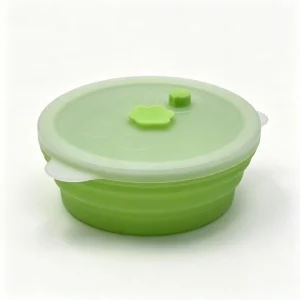
Pack size. A rigid 750ml (25 oz) bottle takes the same footprint whether it’s full or empty. If you’re going through security with an empty bottle to refill on the other side, a folding water bottle saves meaningful pack space without costing you capacity—whether it’s riding in a backpack side pocket or a car cup holder on a road trip.
Material. BPA-free labeling is now table stakes, but the base material—silicone, stainless steel, or plastic—has different practical trade-offs for travel. More on that below.
This is one of the most commonly asked questions before you buy, and the answer depends on how you travel:
Fits the standard airline tray cup holder (~74mm opening). Light and compact, but requires more frequent refills. Best for city travel, short-haul flights, and anywhere water fountains are easy to find.
The sweet spot for most travelers. Covers a full sightseeing day or a moderate hiking day without constant stops. Fits most jacket pockets and daypack side pockets.
Worth it for backpacking and hiking trails where water fountains are scarce, and refill opportunities are far apart. Can feel bulky on planes and in urban environments where pack pockets run narrow.
For flying and international travel, 500ml to 750ml is the range I’d stick to. Fill up past security, and you’ll have enough for boarding and the first leg of the flight without carrying extra weight you don’t need.
This is the question most packing guides skip entirely, and it’s a genuinely useful thing to understand.
Cabin pressure changes can force liquid past a sealed lid—but not for the reason most people assume. Here’s what’s actually happening: when you board and seal your bottle, the air trapped inside is at ground-level pressure. As the aircraft climbs, cabin altitude increases, and the air pressure inside the cabin drops to the equivalent of roughly 6,000–8,000 feet. That creates a pressure differential—the air trapped in your bottle is now at higher pressure than the air around it, so it expands. If the seal isn’t airtight or there’s any flex in the lid assembly, that air expansion pushes liquid past the seal. You end up with a damp bag and no obvious explanation.
However, you can get three things to help avoid this:
1. Leave the bottle slightly open during boarding, then seal it once you reach cruising altitude, after the cabin has finished depressurizing.
2. Use a lid with a dual seal—a silicone gasket combined with a mechanical lock, whether it’s a screw-on cap, a flip-top lid, or a straw lid.
3. Choose a flexible silicone bottle, which naturally adapts to pressure differentials instead of fighting them the way a rigid container does.
For frequent flyers, this is one of the strongest practical arguments for a collapsible silicone design over a rigid stainless-steel bottle.
Food-grade 18/8 stainless steel is durable, doesn’t hold odors, and its vacuum insulation and double-wall construction keep drinks cold for 12–24 hours or hot for several—a real advantage over both silicone and plastic. But the trade-offs for travel are still real.
It’s heavy. A standard 500ml insulated stainless bottle runs 250–350g (9–12 oz) empty. On a long international trip with a tight carry-on, that matters.
It doesn’t collapse. Unlike a silicone bottle, a rigid stainless bottle takes up the same pack space whether it’s full or empty, which works against you on multi-leg trips where you’re emptying and refilling repeatedly. Modern food-grade stainless handles daily use with acidic drinks like coffee or citrus water just fine—leaching concerns mostly apply to lower-quality steel or heavily scratched interiors, not the 18/8 standard used in quality travel bottles.
Lightweight and widely available. But the conversation around plastic bottles has shifted. This is the core reason some cardiologists and researchers have flagged single-use plastic bottles as a health concern: microplastics and chemical compounds including BPA and related plasticizers have been found in bloodstream samples, with higher concentrations among regular bottled-water drinkers. Tritan plastic, a BPA-free copolyester now used in most quality reusable bottles, is widely considered the safer modern standard and a meaningful step up from single-use plastic. Even so, concerns about chemical leaching under UV exposure or repeated heat cycling haven’t fully resolved, which is why reusable plastic still trails silicone and stainless steel on long-term material safety.
For most travel use cases, food-grade silicone hits a sweet spot that neither stainless steel nor plastic quite reaches.
Two trade-offs worth being upfront about: silicone doesn’t insulate, so a stainless insulated bottle is the better pick if keeping a drink cold for 10+ hours is the priority. It also lacks the rigidity of a hard-sided bottle—it can feel a little soft in hand—and like most silicone products, it can pick up odors over time if it isn’t cleaned thoroughly after use. For most travelers, those trade-offs are minor next to the weight and pack-size advantage.
The right material comes down to what you’re optimizing for: if weight and pack space matter most, silicone is hard to beat; if you need a drink to stay cold for 10+ hours, insulated stainless steel is worth the extra grams.