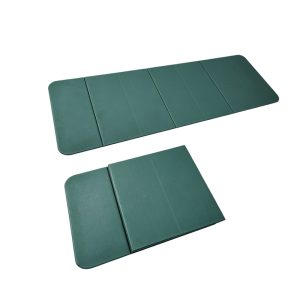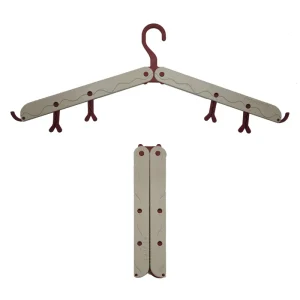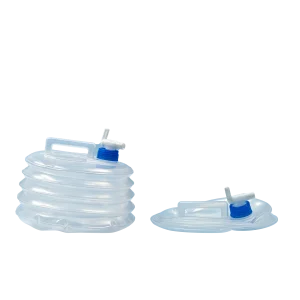

Small apartments rarely suffer from a genuine lack of storage. However, what they actually suffer from is a space-allocation problem. A few bulky everyday items, poorly placed drop zones, and awkward, unused corners can make even a well-kept home feel suffocatingly full.
So, how to organize a small apartment without just filling it with more plastic bins, bulky shelves, and storage boxes?
The secret isn’t buying more storage; it’s making smarter decisions about what deserves easy access, what should be tucked away, and crucially—which items shouldn’t occupy their full size when they aren’t actively being used. Once you establish these ground rules, your apartment stops fighting against you and becomes surprisingly easy to maintain.
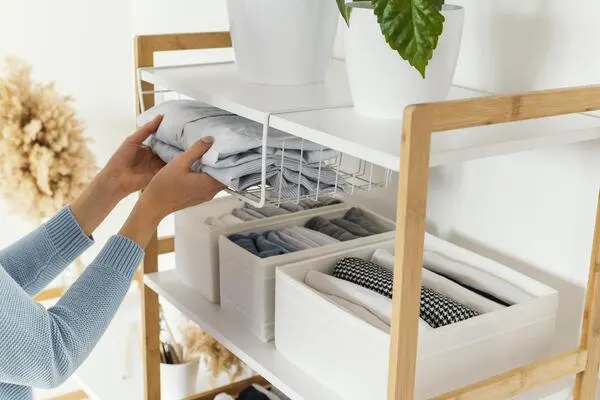
Find out what is actually creating the clutter first. Walk through your apartment and look for three types of problems:
Permanent-footprint items: These are objects that take up significant space all day but are only used occasionally. Examples include rigid water bottles, bulky stools, large organizers, and rarely used kitchen equipment.
Dead-end storage: A cabinet may technically have enough capacity but still be difficult to use. If you have to remove several items to reach the one you need, the storage system is inefficient.
Friction hotspots: These are places where clutter repeatedly appears because the storage location does not match your habits. If shoes always pile up beside the entrance, for example, the problem may be the location of the shoe storage rather than a lack of discipline.
Fix these problems before buying anything. Otherwise, you may simply add more storage products without reducing the underlying clutter.
Not every possession deserves the same level of accessibility. A simple three-level system works well in a small apartment:
This approach prevents valuable everyday storage space from being occupied by things you rarely touch.
The same principle applies to spare rooms and multipurpose areas. If a second bedroom is used as both an office and guest room, decide which function takes priority and avoid allowing unused floor space to become a general dumping area.
The goal is not to maximize storage capacity. It is to minimize the effort required to access the things you actually use.
This is one of the most overlooked small-apartment organization strategies. When evaluating an item, don’t only ask: Where can I store this? Also ask: Does this need to occupy its full size when I’m not using it? If the answer is no, look for a collapsible, stackable, or foldable alternative.
For example, rigid bottles and bowls can consume valuable cabinet space even when empty. Collapsible versions can provide the same basic function while taking up substantially less space during storage.
The same idea applies to household equipment. A conventional step stool may need a dedicated floor area, while a foldable stool can be stored in a narrow gap or closet. A foldable clothes hanger can also be useful when closet space is limited.
The point is not to replace everything you own with foldable products. Instead, prioritize items that:
These are the items where space-saving designs can make the biggest difference.
Once unnecessary bulk has been reduced, look at the space your apartment already provides. Floor space is usually the most valuable because it is needed for walking, furniture, and everyday activities. Walls, doors, and cabinet interiors often provide additional storage opportunities without reducing usable floor area.
Consider these:
Behind doors: Over-the-door organizers can hold shoes, cleaning supplies, accessories, or other lightweight items.
Inside cabinet doors: Slim racks and hooks can make use of otherwise empty surfaces for measuring cups, pot lids, or small bathroom products.
Above existing furniture: Shelves above desks, counters, or TV units can use vertical space while keeping frequently used items accessible.
Awkward corners: Instead of trying to hide an unused corner, give it a specific purpose. A narrow entrance corner, for example, can become a dedicated bag or coat drop zone.
Be careful not to fill every available wall with shelves. Too much visible storage can make a small apartment feel visually crowded. Keep heavier objects lower and use higher areas for lighter or less frequently accessed belongings. Tall freestanding furniture should also be properly secured to reduce tip-over risks.
Small apartments often require one space to perform several functions. A dining table may become a work desk during the day. A living room may serve as both a relaxation area and a workout space.
The problem begins when equipment from every activity remains visible at the same time. Instead, create simple setup-and-reset routines.
For example:
Work mode: Laptop, keyboard, notebook, and other work equipment come out.
Dinner mode: Work equipment is cleared and the table becomes a dining surface.
Workout mode: Exercise equipment comes out temporarily and returns to storage afterward.
Foldable equipment can be especially useful here. A foldable laptop stand, for example, can create a more structured workspace during working hours and then collapse into a drawer when the desk needs to serve another purpose.
This approach effectively gives one surface several functions without requiring additional furniture.
One of the most practical rules for organizing a small apartment is simple: Store things where you naturally use or drop them. If keys always land on the kitchen counter, a key tray in the bedroom will not solve the problem.
If shoes come off immediately inside the front door, shoe storage should be near the entrance. If laundry accumulates on a bedroom chair, the laundry basket needs to be closer to that chair—not somewhere theoretically more convenient but practically ignored.
Think about your apartment as a series of movement paths:
Enter → drop keys → remove shoes → hang coat
Cook → use dishes → clean → store
Work → finish → clear desk → relax
Place storage along these existing paths instead of forcing yourself to create new habits. Good organization reduces friction. The easier it is to put something away, the more likely the system is to remain useful after the initial organizing session.
Even a well-designed storage system will eventually become messy. Instead of waiting until the apartment needs a major weekend reorganization, identify the two or three areas that accumulate clutter fastest.
These might be:
At the end of the day, reset these areas first. A simple routine might include clearing nonessential items from the kitchen counter, returning coats and bags to their storage locations, and moving clothes from a chair to either the laundry basket or closet.
You can also use a one-in, one-out rule for categories that tend to grow quickly. When a new mug, jacket, bag, or similar item enters your home, consider whether an older item should leave. This prevents storage problems from returning simply because the number of possessions keeps increasing.